Recent Trends in Artificial Intelligence in Computer Programming Education
Keywords:
Artificial intelligence, programming education, generative AI, coding assistants, intelligent tutoring systems, automated assessment, personalized learningAbstract
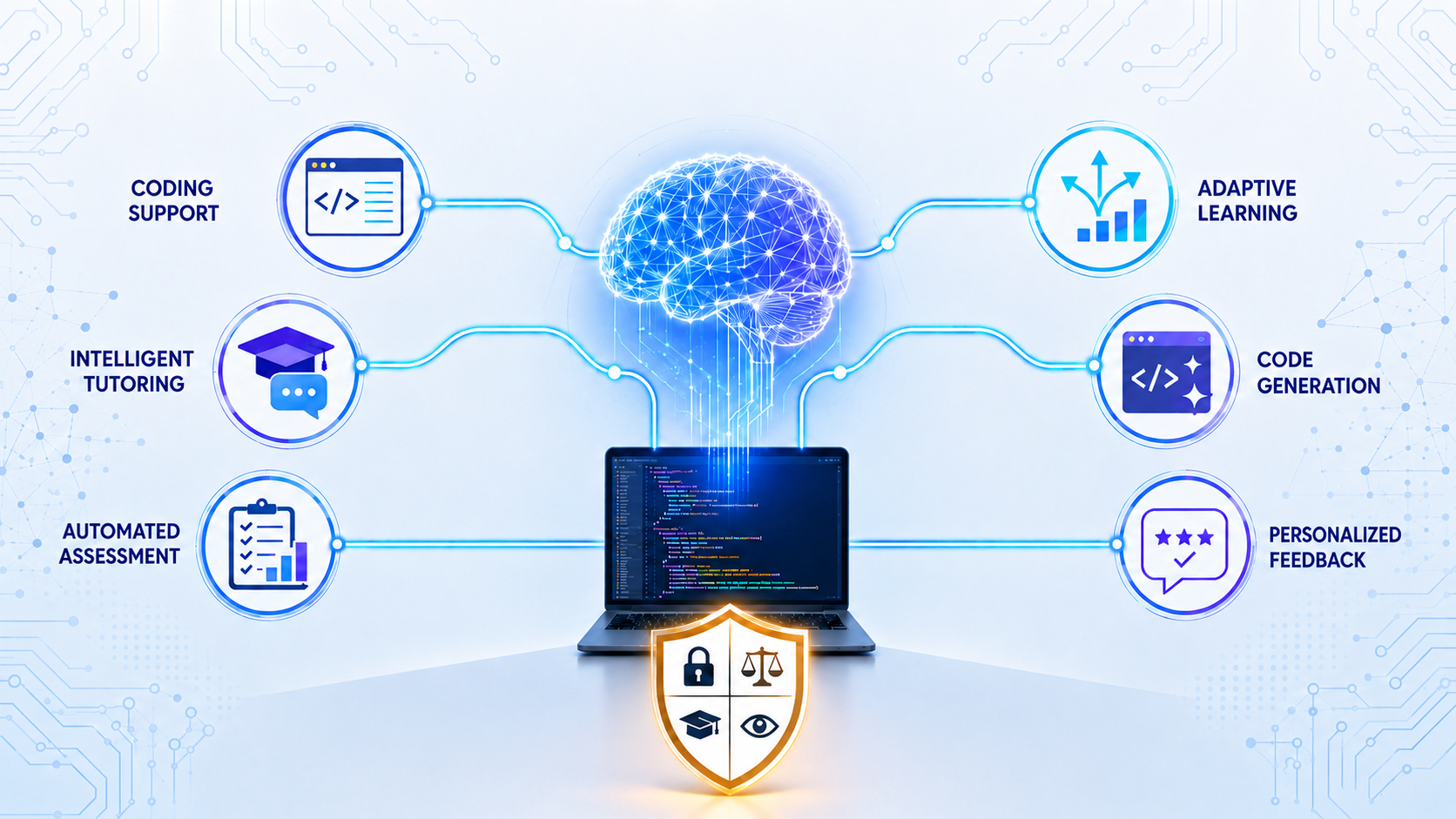
Artificial intelligence (AI) is transforming computer programming education by introducing new methods for instruction, assessment, feedback, and personalized learning. This article reviews recent trends in the application of AI to programming education, focusing on AI-powered coding assistants, intelligent tutoring systems, automated assessment tools, adaptive learning platforms, code-generation models, and personalized feedback systems. The study evidence indicates that AI tools can improve access to immediate feedback, support debugging and code comprehension, increase student engagement, and enable more individualized learning experiences. They can also assist instructors by automating routine assessment tasks, identifying common misconceptions, and supporting the preparation of instructional materials. Nevertheless, the integration of AI raises important concerns regarding excessive dependence on automated solutions, inaccurate code generation, plagiarism, academic integrity, algorithmic bias, data privacy, and unequal access to advanced technologies. The article concludes that AI should be implemented as a complementary educational resource rather than a replacement for instructors or independent programming practice. Effective adoption requires appropriate pedagogical frameworks, transparent assessment policies, AI literacy, and continuous evaluation to ensure that these technologies strengthen computational thinking, creativity, and problem-solving skills.
Published
How to Cite
Issue
Section
Copyright (c) 2026 Int. J. Electr. Eng. Sustain.

This work is licensed under a Creative Commons Attribution-NoDerivatives 4.0 International License.