Environmental Impacts on Energy Storage Systems Integrated with Renewables
Keywords:
Energy Storage Systems, Renewable Energy Integration, Life Cycle Assessment, Environmental SustainabilityAbstract
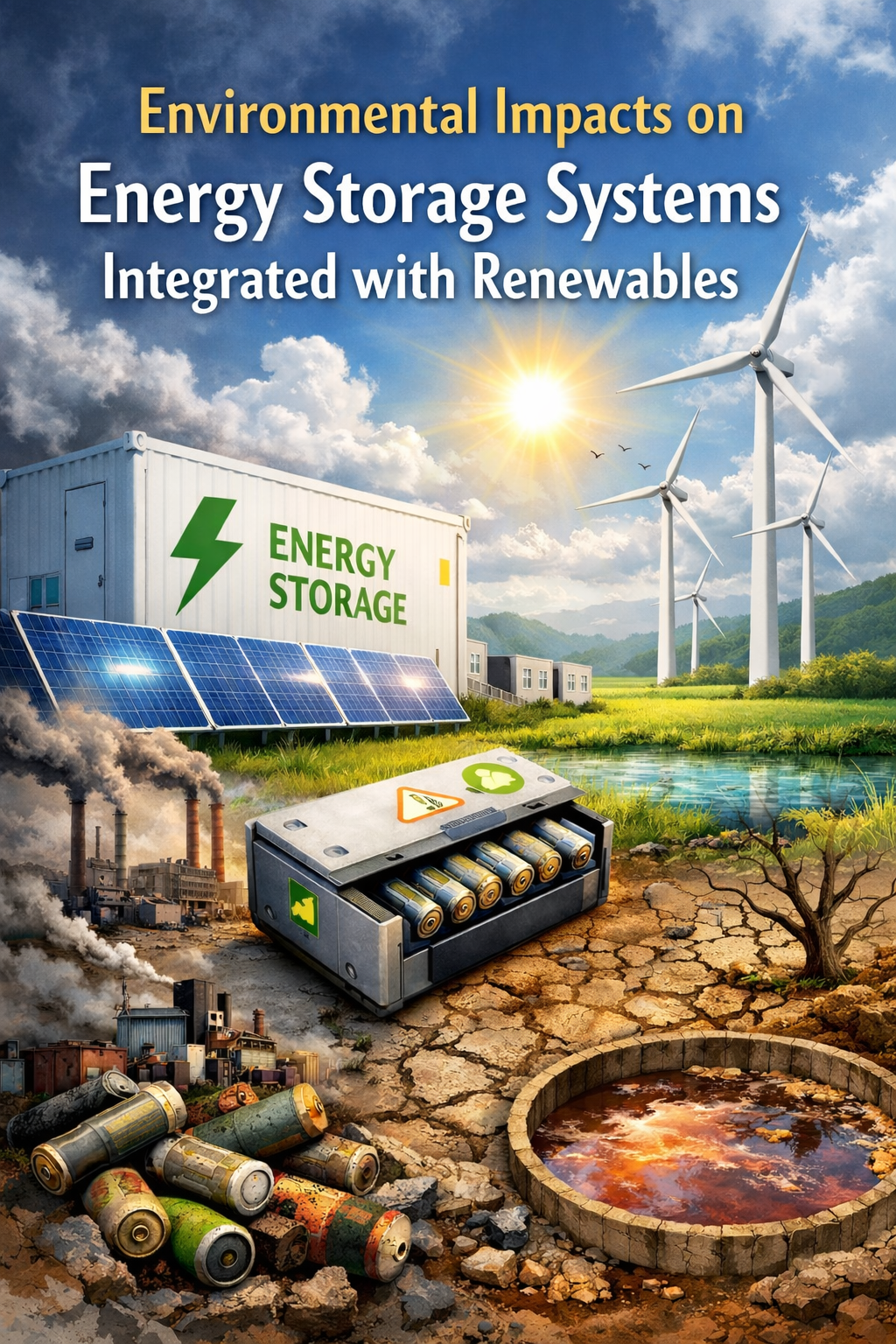
The integration of energy storage systems (ESS) with renewable energy technologies has become a critical component in the transition toward sustainable and low-carbon power systems. This study examines the environmental impacts associated with ESS deployment through four key perspectives: the influence of climatic and environmental conditions on storage performance, the environmental footprint evaluated through Life Cycle Assessment (LCA), the ecological risks and resource sustainability of materials used in storage technologies, and the environmental benefits achieved in renewable-dominated power systems. Environmental factors such as temperature variation, humidity, dust accumulation, and extreme weather conditions significantly affect the operational efficiency, degradation rates, and reliability of storage technologies including lithium-ion batteries, flow batteries, and hydrogen storage systems, particularly in regions characterized by hot and arid climates. The analysis also highlights the importance of assessing the full life cycle environmental impacts of energy storage technologies, including raw material extraction, manufacturing, transportation, operation, and end-of-life management. Critical materials such as lithium, cobalt, nickel, vanadium, and rare earth elements raise concerns regarding resource sustainability, environmental degradation, and supply chain stability. At the same time, ESS integration provides significant environmental advantages by reducing renewable energy curtailment, improving grid stability, and lowering reliance on fossil-fuel-based backup generation, resulting in reductions in greenhouse gas emissions and air pollutants. Advancements in alternative technologies, including sodium-ion batteries, solid-state batteries, and green hydrogen storage, present promising pathways for improving environmental sustainability. Overall, energy storage systems play a fundamental role in enabling large-scale renewable energy integration, while sustainable material management, improved technology design, and supportive policy frameworks remain essential for minimizing environmental impacts and supporting long-term decarbonization goals.
Published
How to Cite
Issue
Section
Copyright (c) 2026 International Journal of Electrical Engineering and Sustainability

This work is licensed under a Creative Commons Attribution-NoDerivatives 4.0 International License.